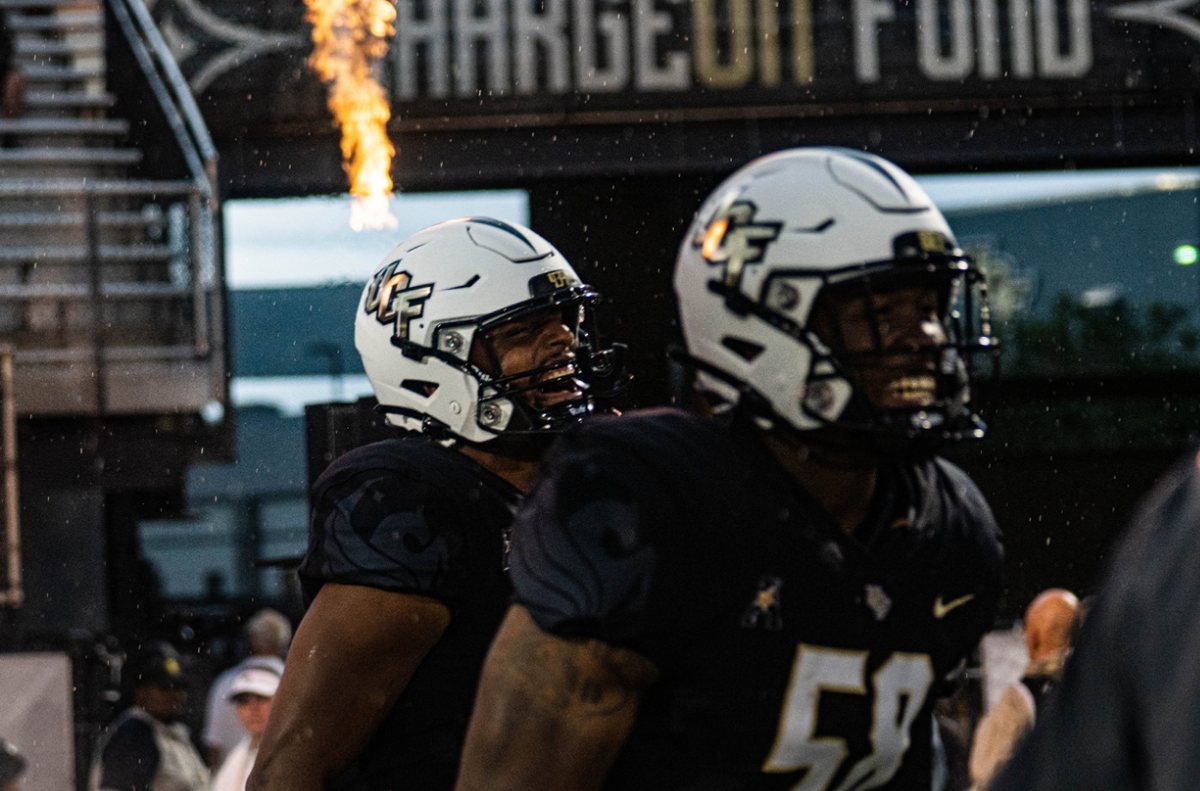
Most of the coverage on this site — the UCF and ODU galleries, the wrestling ring shots, the wildlife portraits — comes off a Sony a6400. It's the camera I reach for whenever the primary job is stills: fast, small, and the APS-C crop turns my 200–600mm into an effective 300–900mm without adding weight to the bag. For gameday work where I'm tracking a play from the far sideline, that reach matters more than full-frame low-light headroom.
Why the a6400 for stills
The a6400's autofocus is the whole reason it stays in the bag. Real-time tracking locks onto a player and holds through pad collisions, screens, and the general chaos of a football sideline — the kind of situation where a camera that hunts for even half a second means a missed moment. Burst shooting at 11fps gives enough of a buffer to pick the exact peak of the action afterward rather than guessing in the moment.
It's also just light. After a full slate of games in one day — football in the afternoon, basketball or wrestling at night — the difference between a full-frame body with a battery grip and the a6400 is the difference between a camera I'm still enjoying using by the fourth quarter and one I'm not.
Why the FX30 for video
The FX30 is built video-first, and it shows the moment you hand it footage instead of frames. Better rolling shutter behavior, a form factor that's actually comfortable to run-and-gun with, and internal codecs that hold up to color grading without falling apart — that's what separates the sizzle reels and edited highlight packages from something shot as an afterthought on a stills camera.
Running the a6400 and FX30 side by side means I can shoot photos and video of the same moment without swapping bodies mid-play. On a live event, that overlap is the whole point — a client rarely wants just photos or just video anymore; they want both from the same afternoon.
The takeaway
Neither camera is trying to do the other's job. That's deliberate. A single body that's "good enough" at both stills and video ends up compromising on both. Two bodies, each built for what it's actually doing, is what makes it possible to deliver a full gameday package — photos and edited video — without the seams showing.